Block A, Jacobs Men’s Hostel
Since the first Togt barracks were completed in 1876, hostels have been a fact of life in Durban. The underlying purpose was to confine workers to specific areas within Durban, to discourage the permanent settlement of Africans in ‘white’ towns, while ensuring the availability of a cheap migrant labour force. Hostels were subsidised by the profits from municipal beer halls – a system that became known as the Durban System and was replicated throughout South Africa, and other parts of Africa – and were entrenched as an instrument the Apartheid economy.
After 1986, when the Pass Laws (and the beer halls) were abolished, administration and control of hostels deteriorated. This has led to overcrowding and worsening living conditions.
The legacy of the hostels for the current government presents a double bind. On the one hand the hostels are manifestations of one of the worst aspects of apartheid; they have been a major contributor to the breakdown of social structures, and without a funding stream from beer halls, they are a financial drain. This situation is escalating as overloaded services create an unsustainable maintenance burden, and at the same time provide an argument for non-payment of even nominal rentals (generally between R15 and R50), in the eyes of residents. On the other hand, transformation of the hostels is difficult, partly because, paradoxically, hostel residents themselves do not necessarily want transformation.
Post 1994, there has been the political desire to transform the hostels, both to ‘normalise’ what is really an unnatural situation, and to make them financially sustainable. A hostels upgrading policy forms part of the broader housing policy framework, and while accepting that hundreds of thousands of people live in hostels, the main intention of the policy is to facilitate their transformation to decent living environments, preferably in the form of so-called family units.
In 1999, the national government started a process to refine and revise hostels policy, and called on the provinces to put forward their proposals. As part of the process, hostel residents were consulted, and in KZN, which has a high concentration of public sector hostels, the response was resoundingly in favour of the continued existence of hostels. Quality of life issues, especially the need for privacy, dignity and the basic need for facilities such as functional ablutions, were highlighted, but conversion to more conventional forms of housing was not seen as the solution.
The responsibility for hostels is currently being passed from Provincial to Local Government, and the challenge now is to make living conditions acceptable, while reducing the financial burden. Various hostel-upgrading projects are underway.
Although the hostels themselves are relatively inaccessible for non-residents, lack of privacy within the hostel (and by implication, security for ones person and possessions) is probably the biggest issue – essentially residents live out their lives in public view. The only private space is one’s actual bed, and even that is usually in a dormitory. There are no hidden cameras, and no one gets to win a million rand for sticking it out or surviving, but given the hostels origins as an instrument to control the labour force, an ironic reference to Big Brother is not out of place.
Hostels clearly provide a solution for those who have managed to gain access in a hostel to some kind of home, community, and to services – however imperfect, and for those who need a base in the city but would rather consolidate their investment in housing in a rural area. Space in a hostel is not easy to come by, and it is not an urban myth (although it is also not official policy) that hostel beds are sometimes still handed down through generations. For many there is perceived to be no alternative, but it is interesting to note that when an alternative is offered as a result of an upgrading project, the majority of residents state a preference not to move. There are also instances where hostel residents who are in full time employment, and could afford a different, and perhaps better, physical home, choose to remain hostel residents.
Although there are obvious problems, in some ways the fact that the social problems are not worse, that murder statistics are not higher, that communities are organised and are vocal about their rights and needs, that each precious bed space is incredibly orderly and is usually the site of some kind of individual expression, is testament to the amazing resilience, of the hostel residents.
The issues of privacy and intimacy explored in the broader body of Buckland’s bed project, find a particular resonance in the Jacobs Men’s Hostel installation. The hostel was commonly believed to be the oldest hostel in Durban.
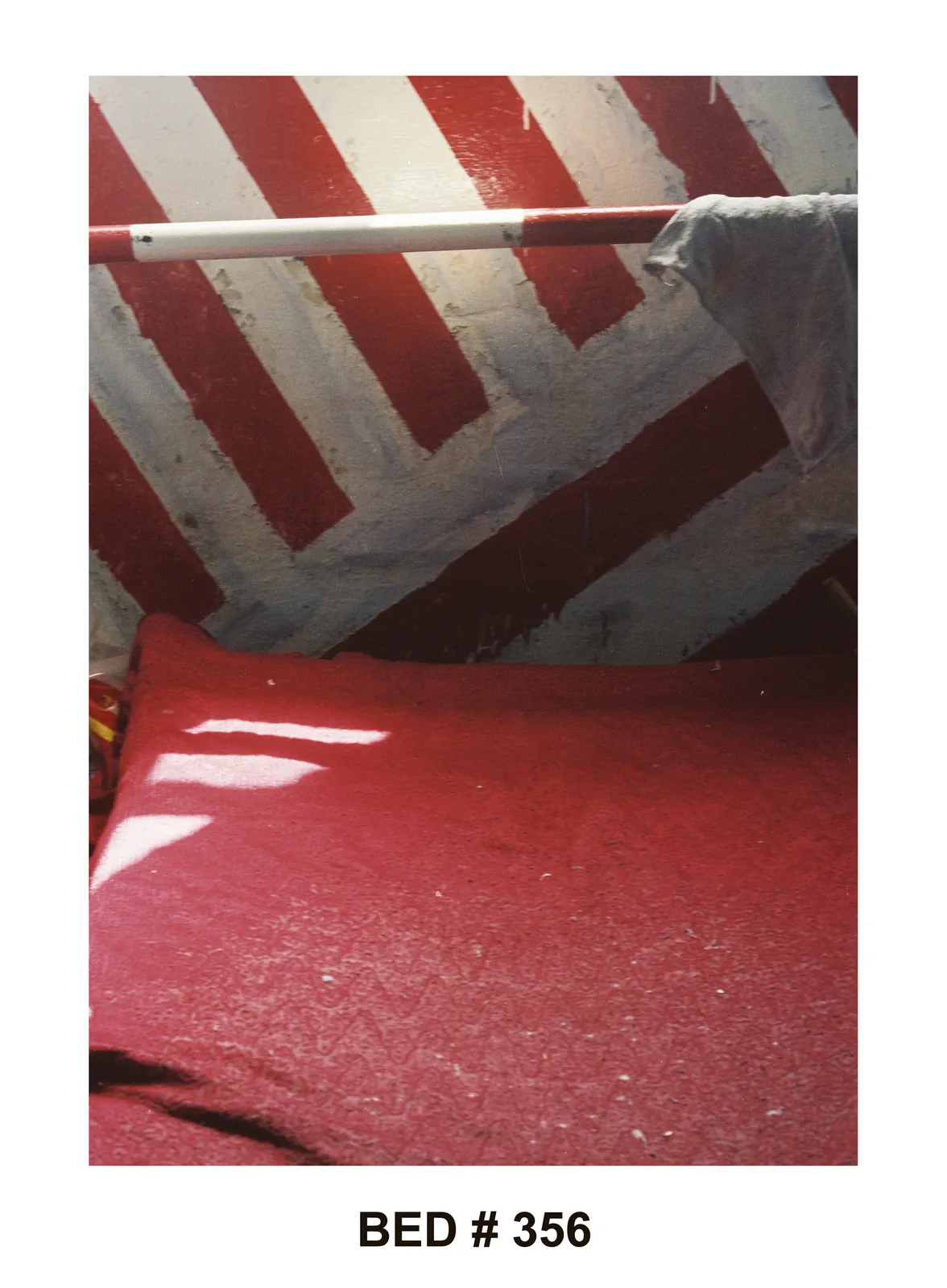
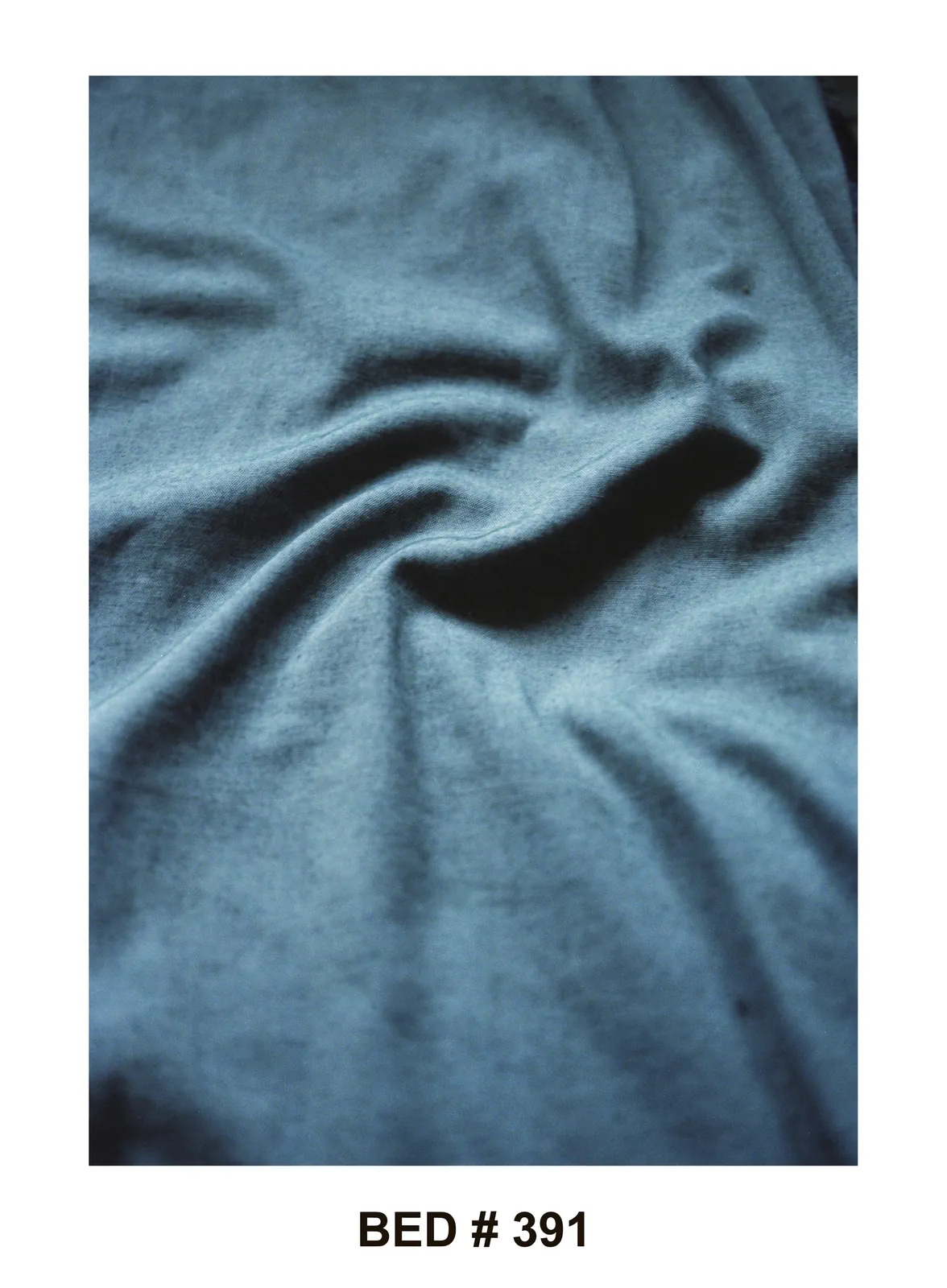
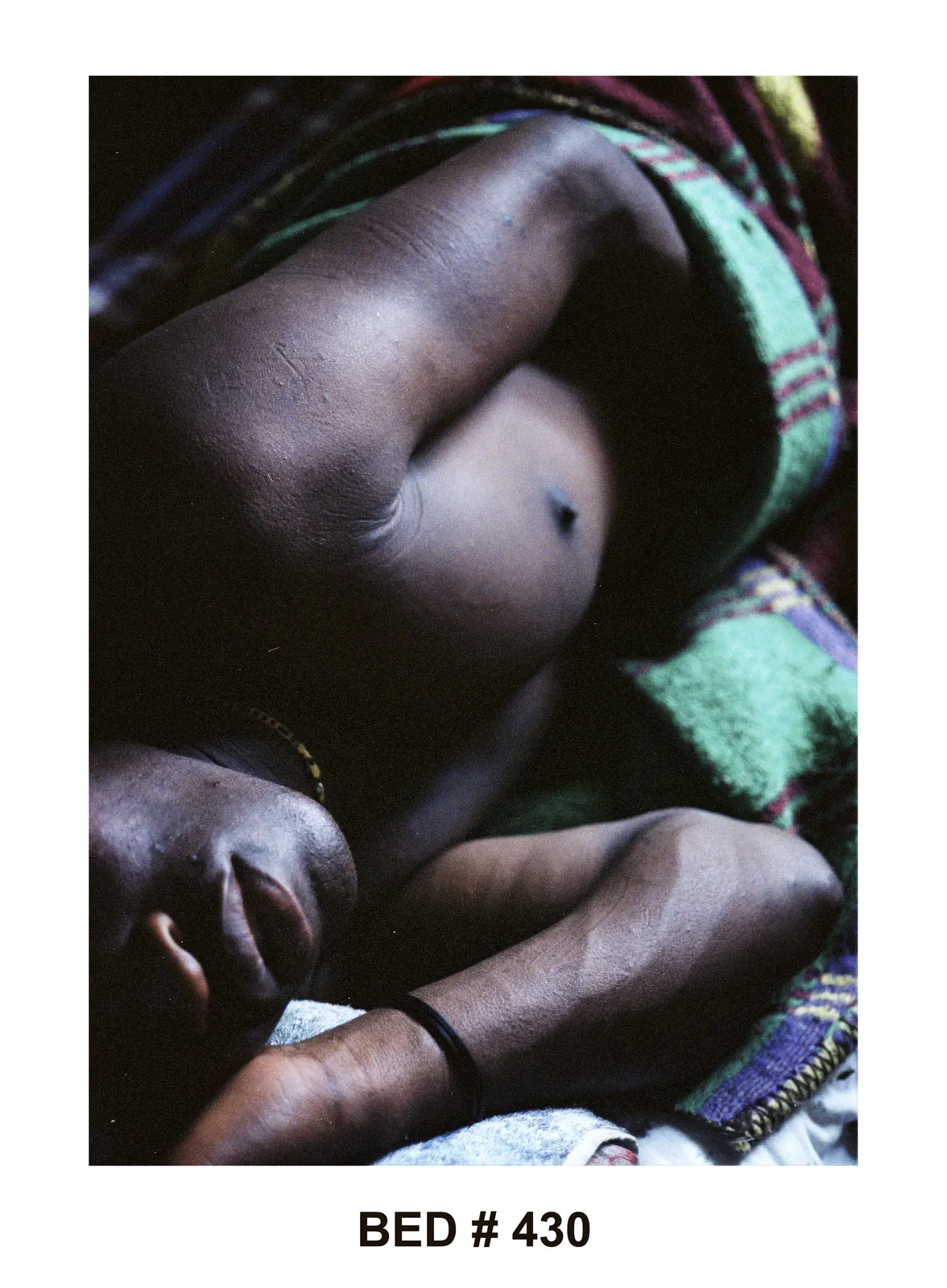
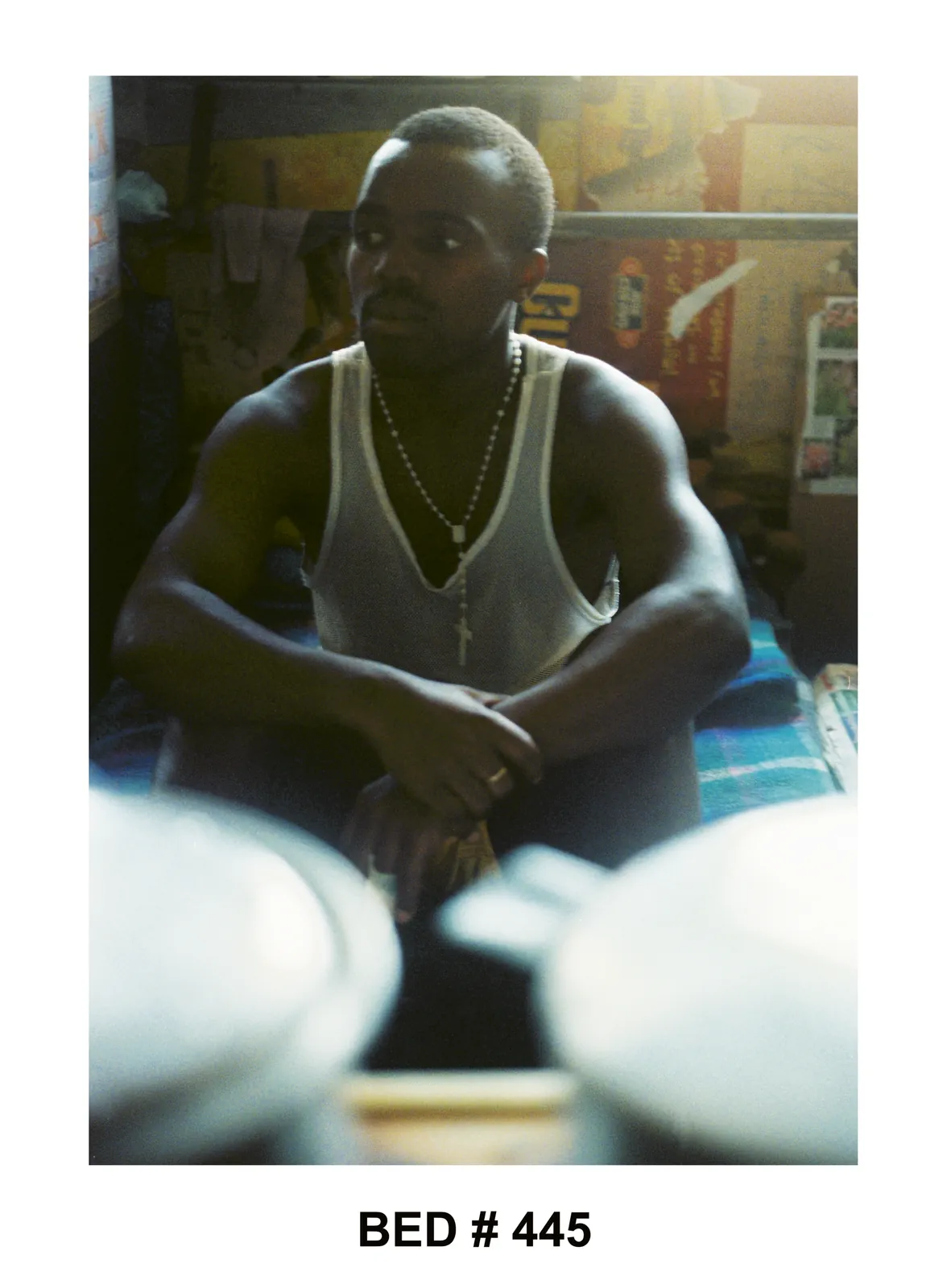
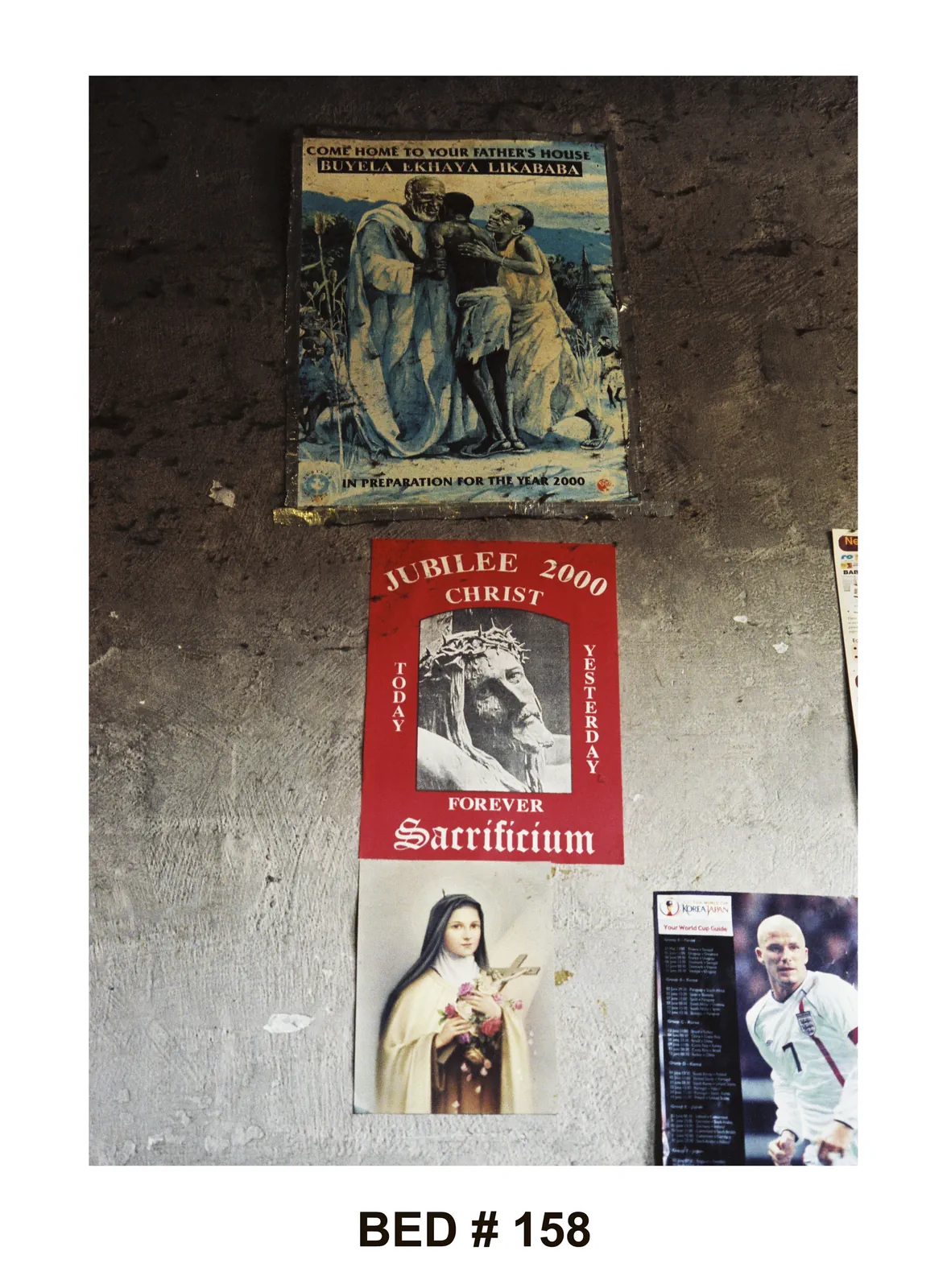
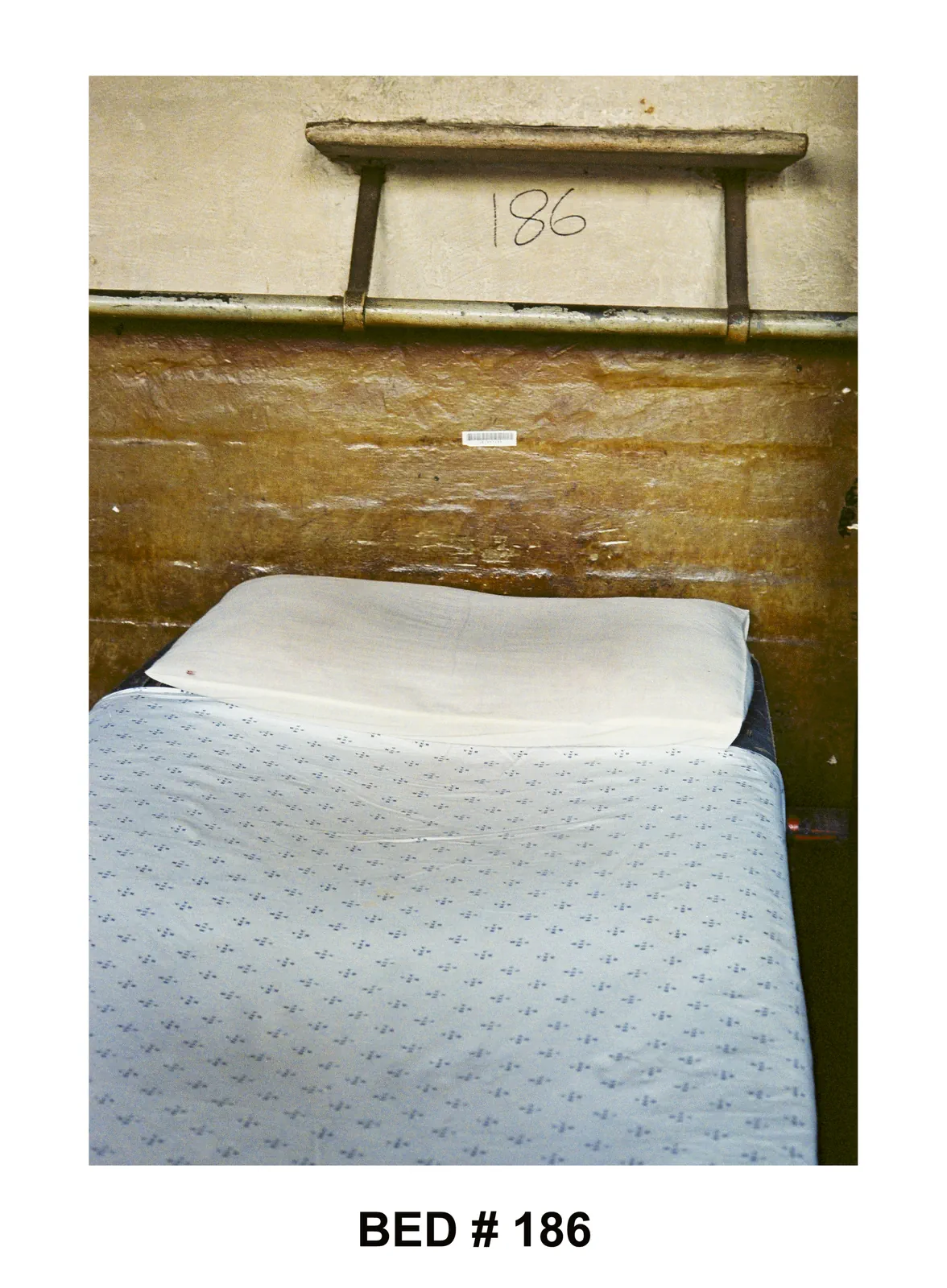
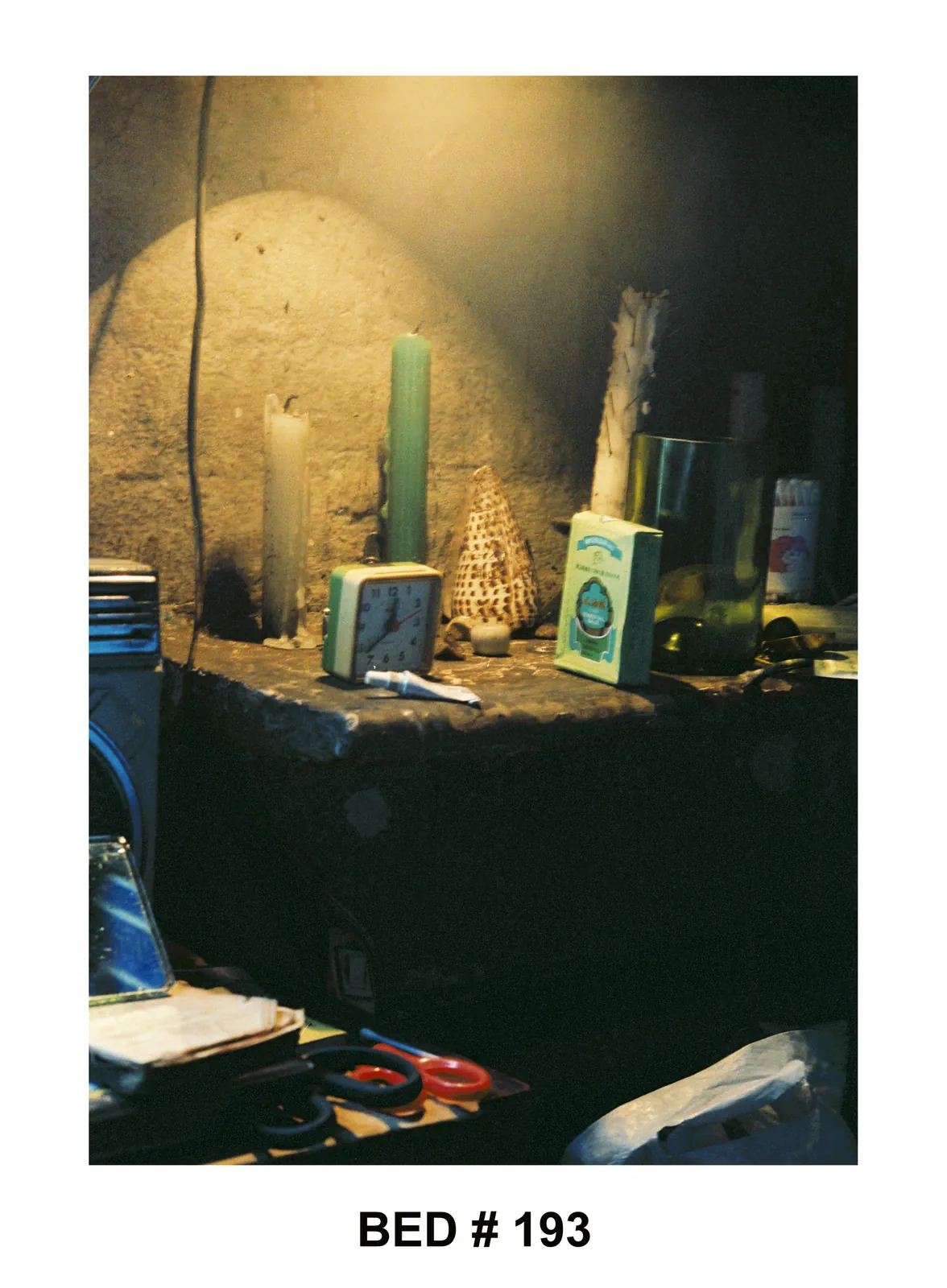
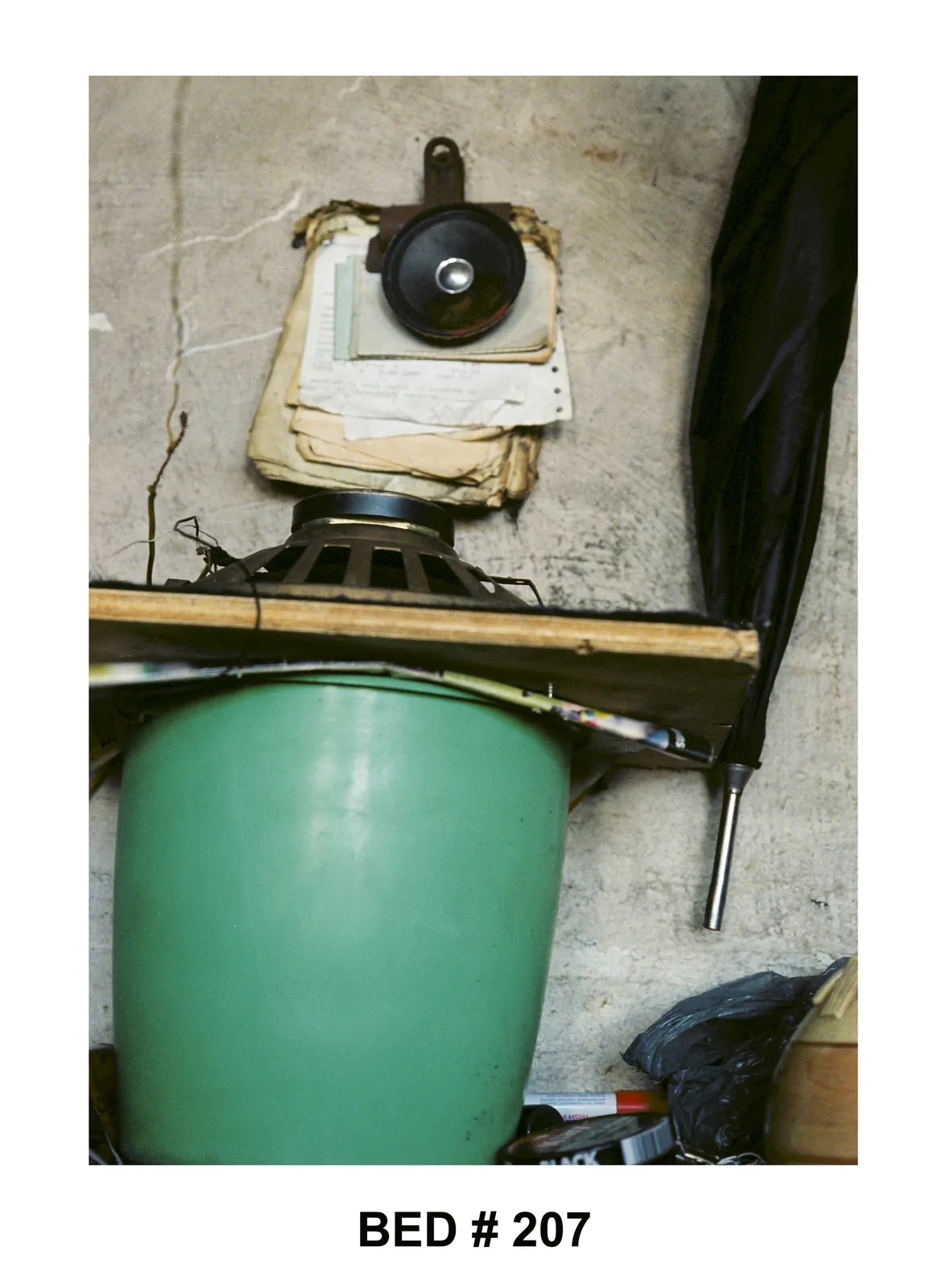
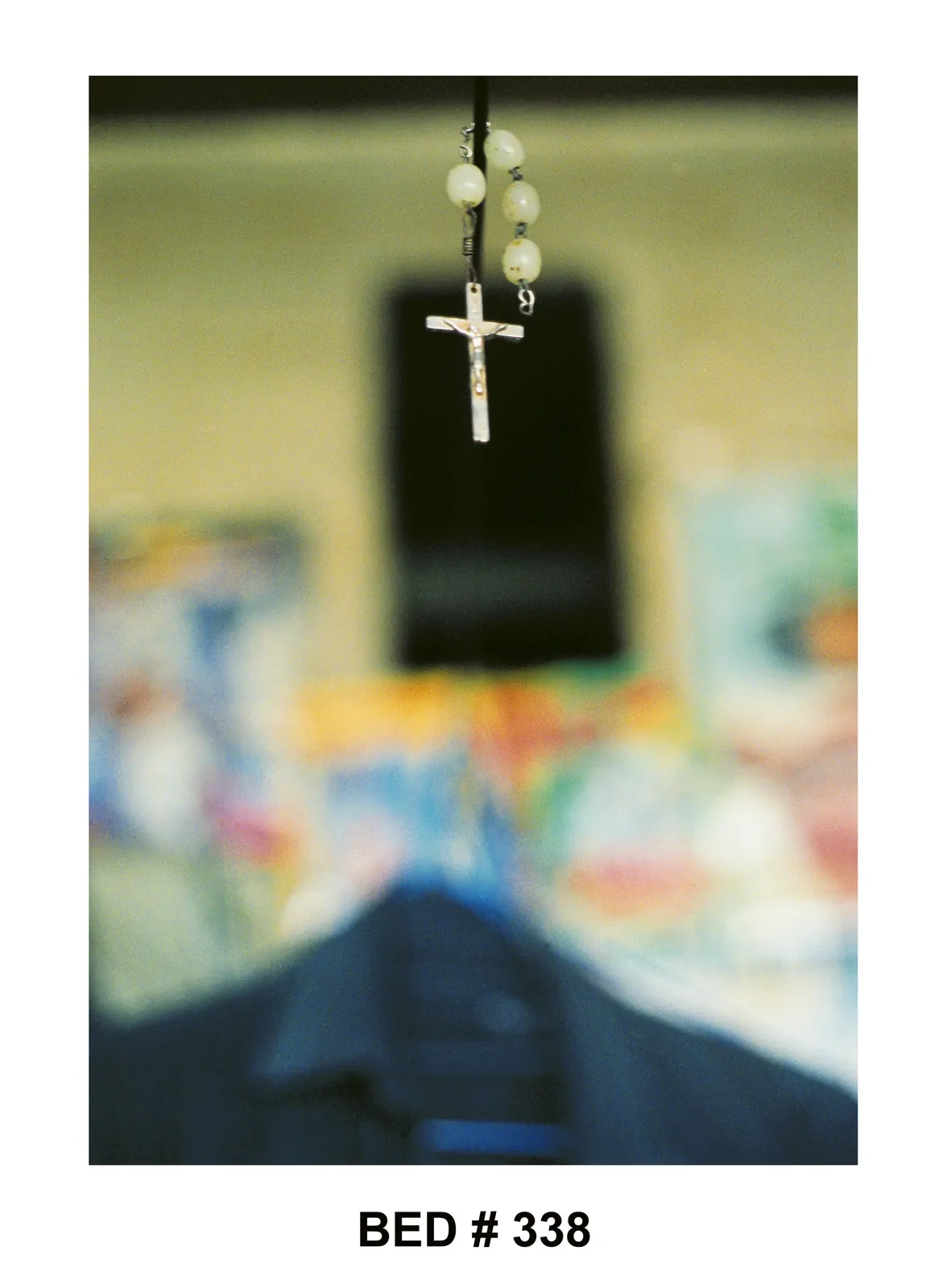
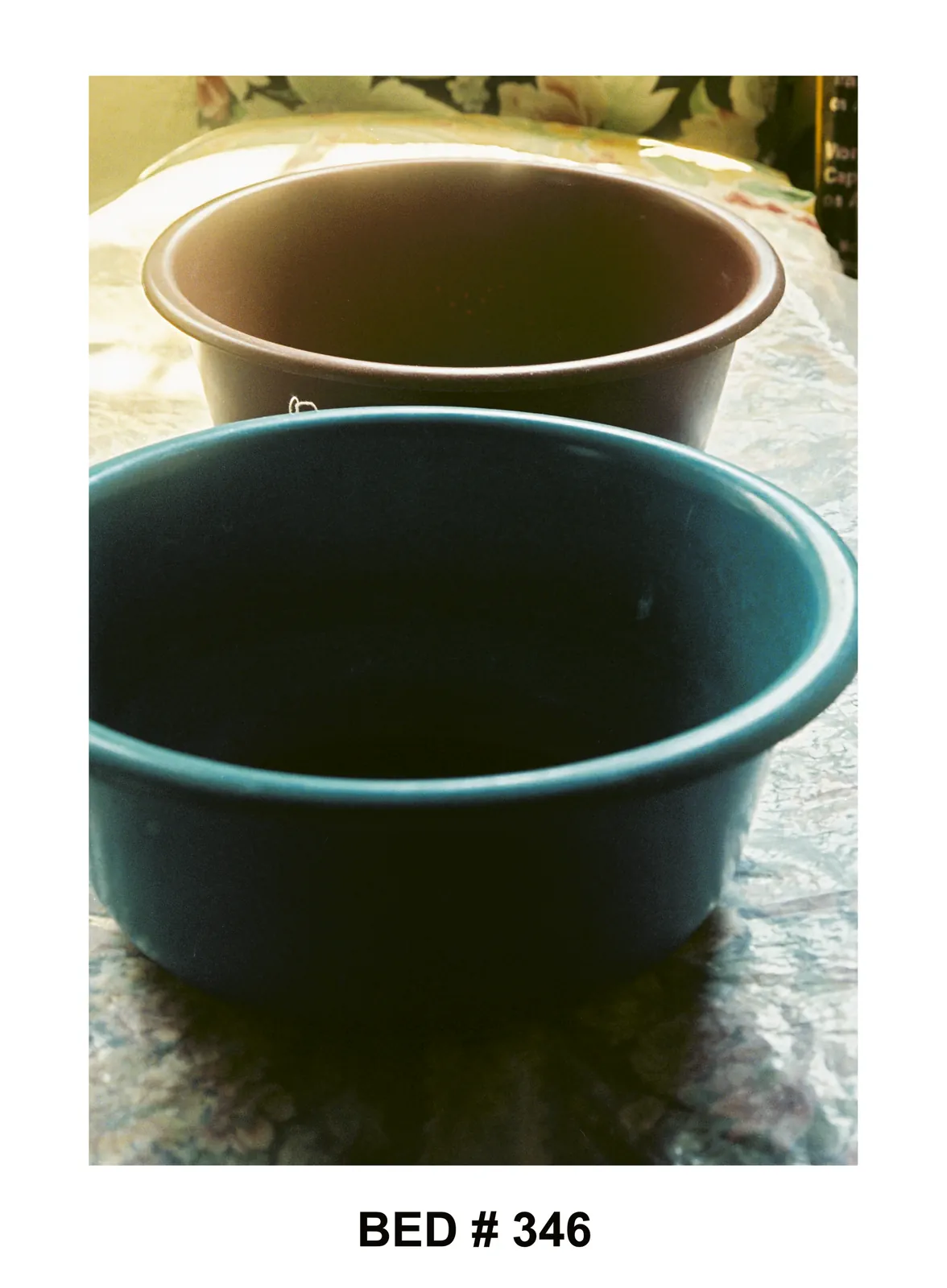
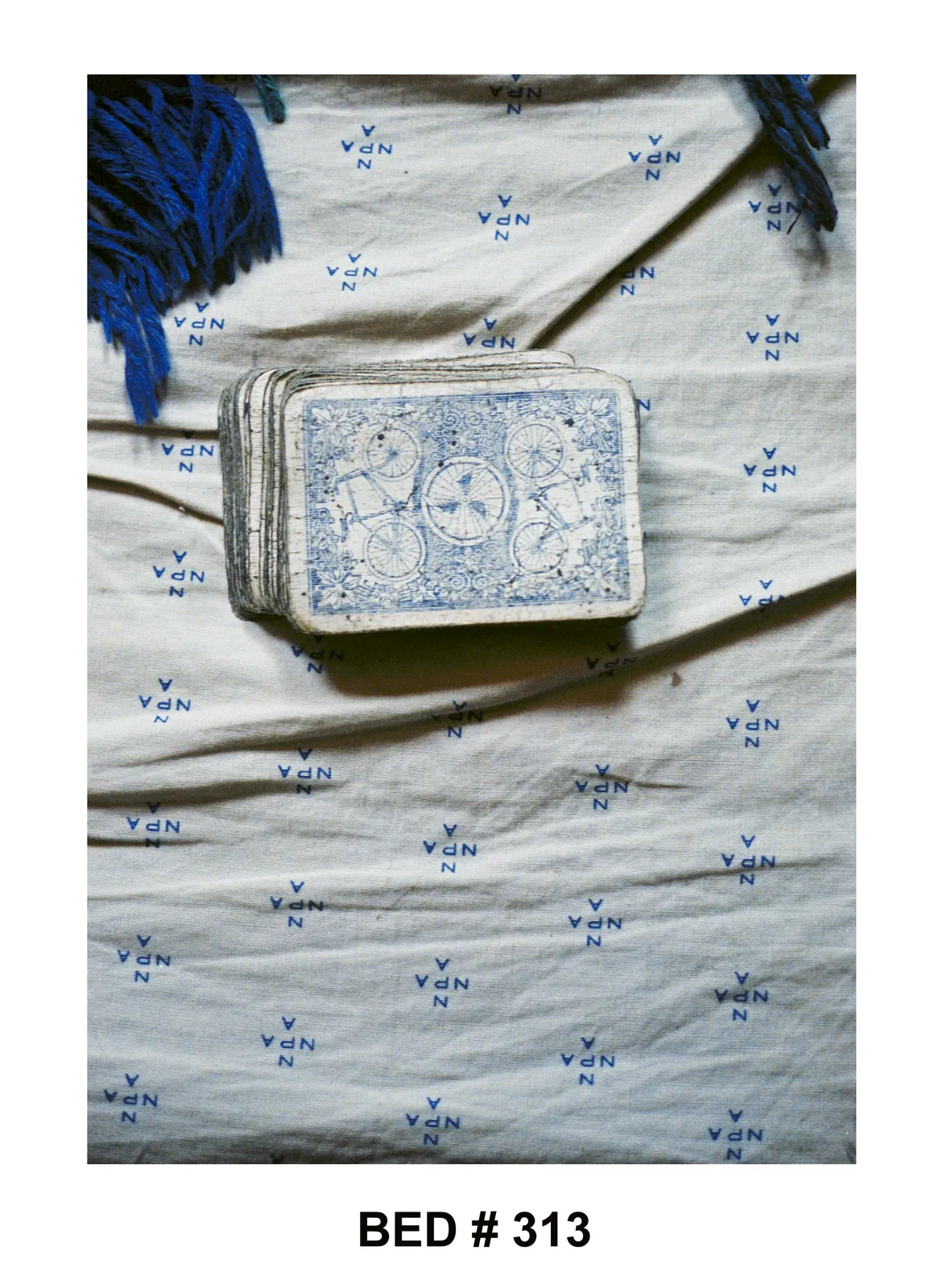
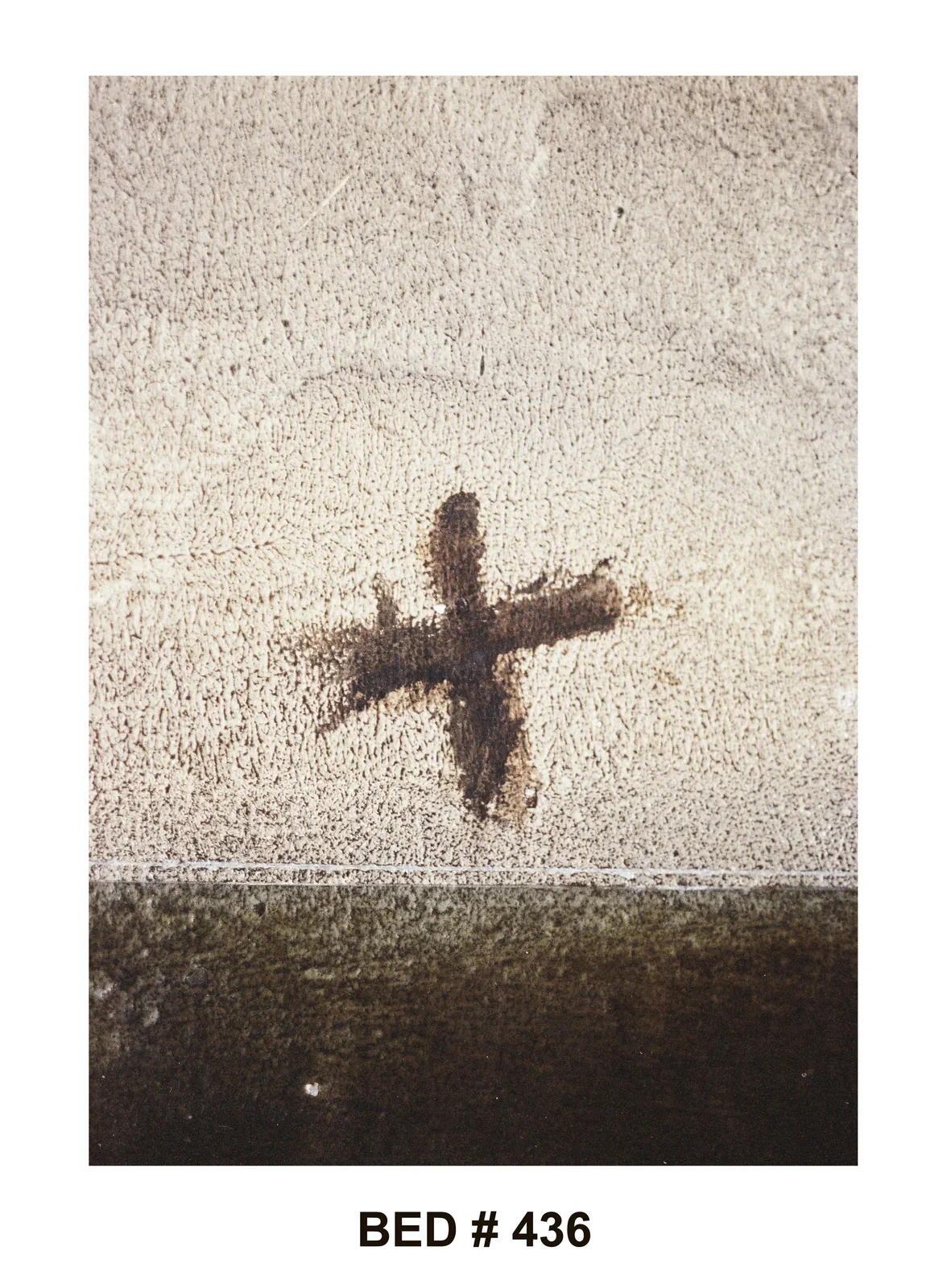
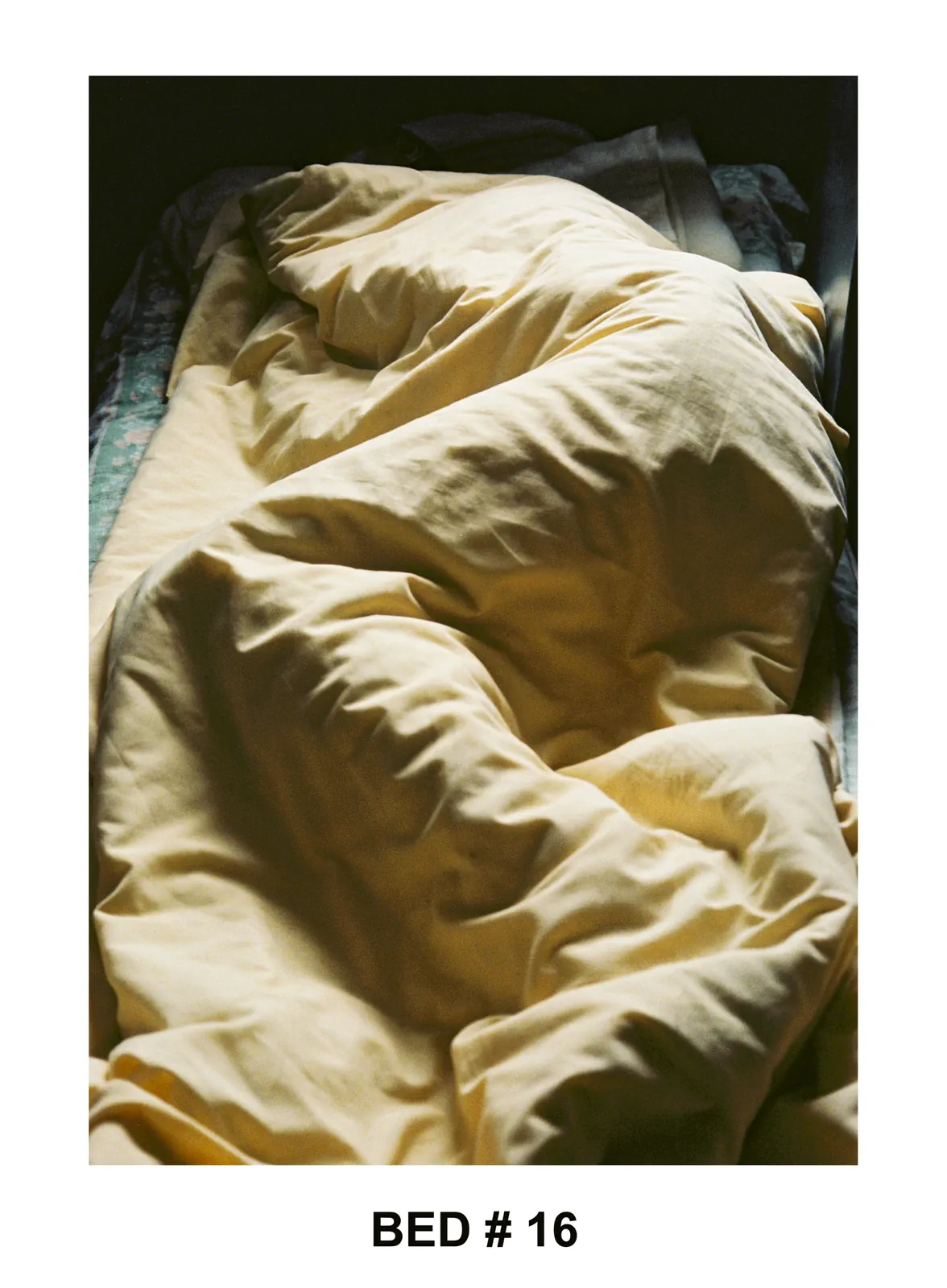
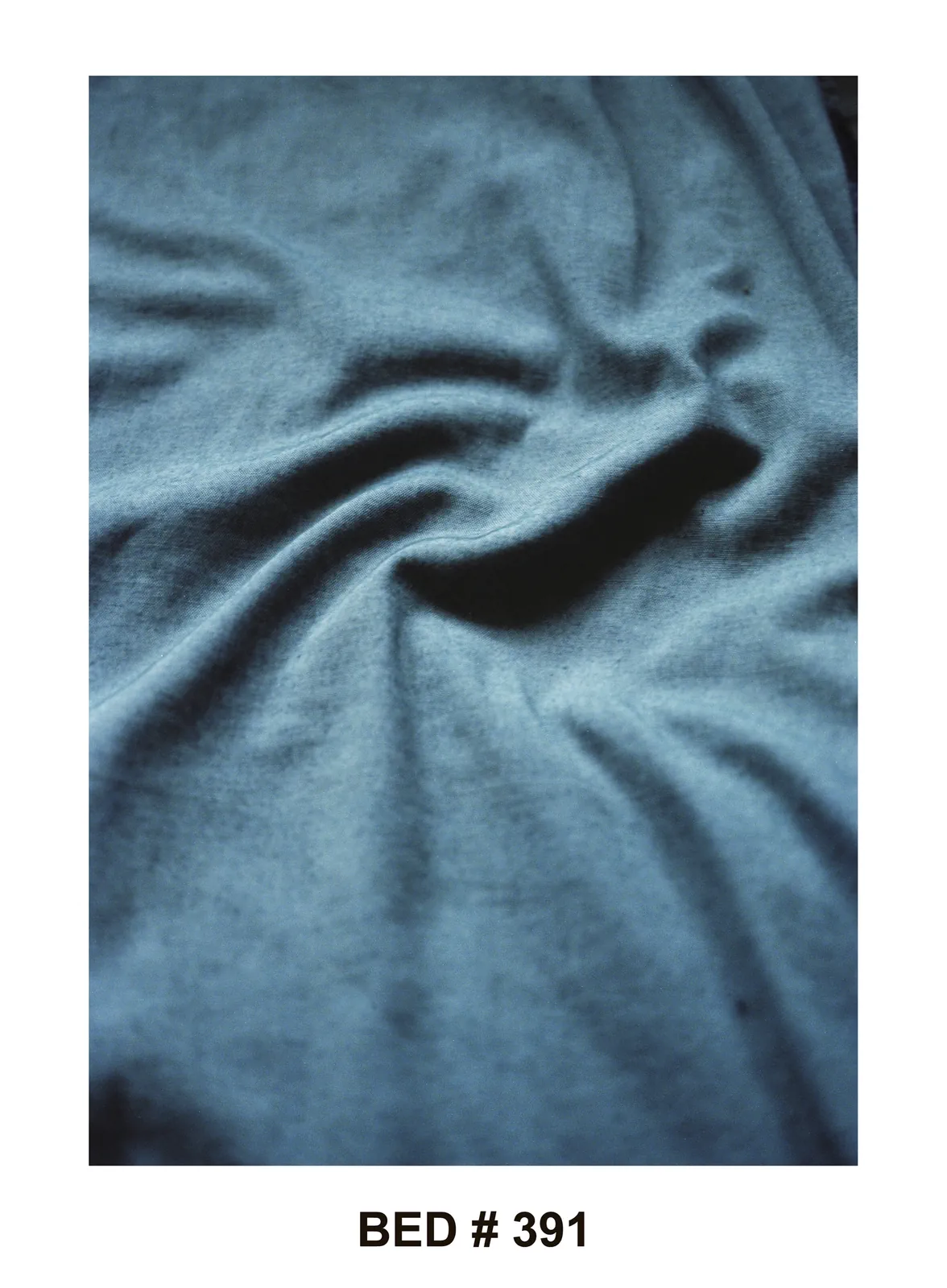
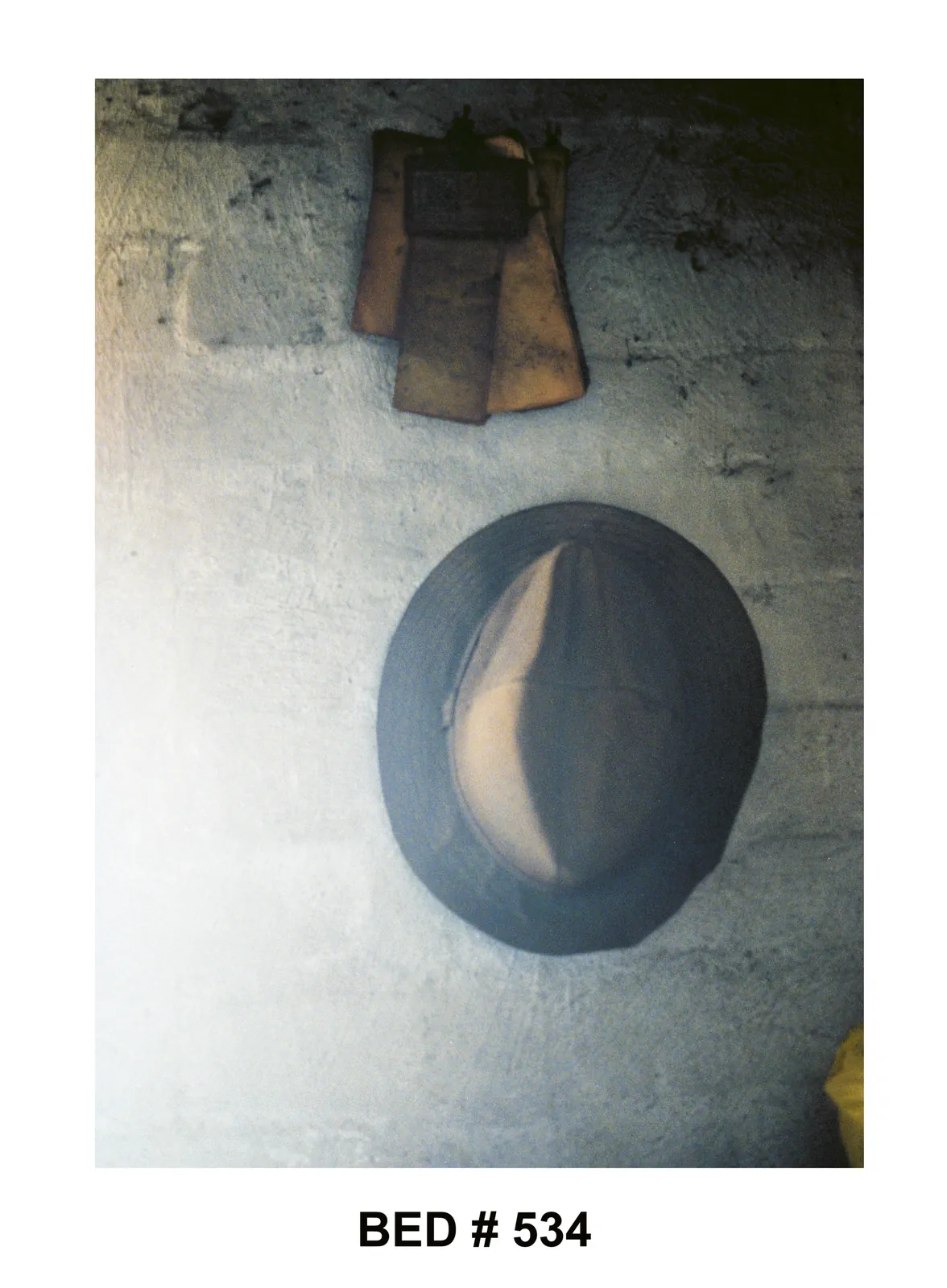
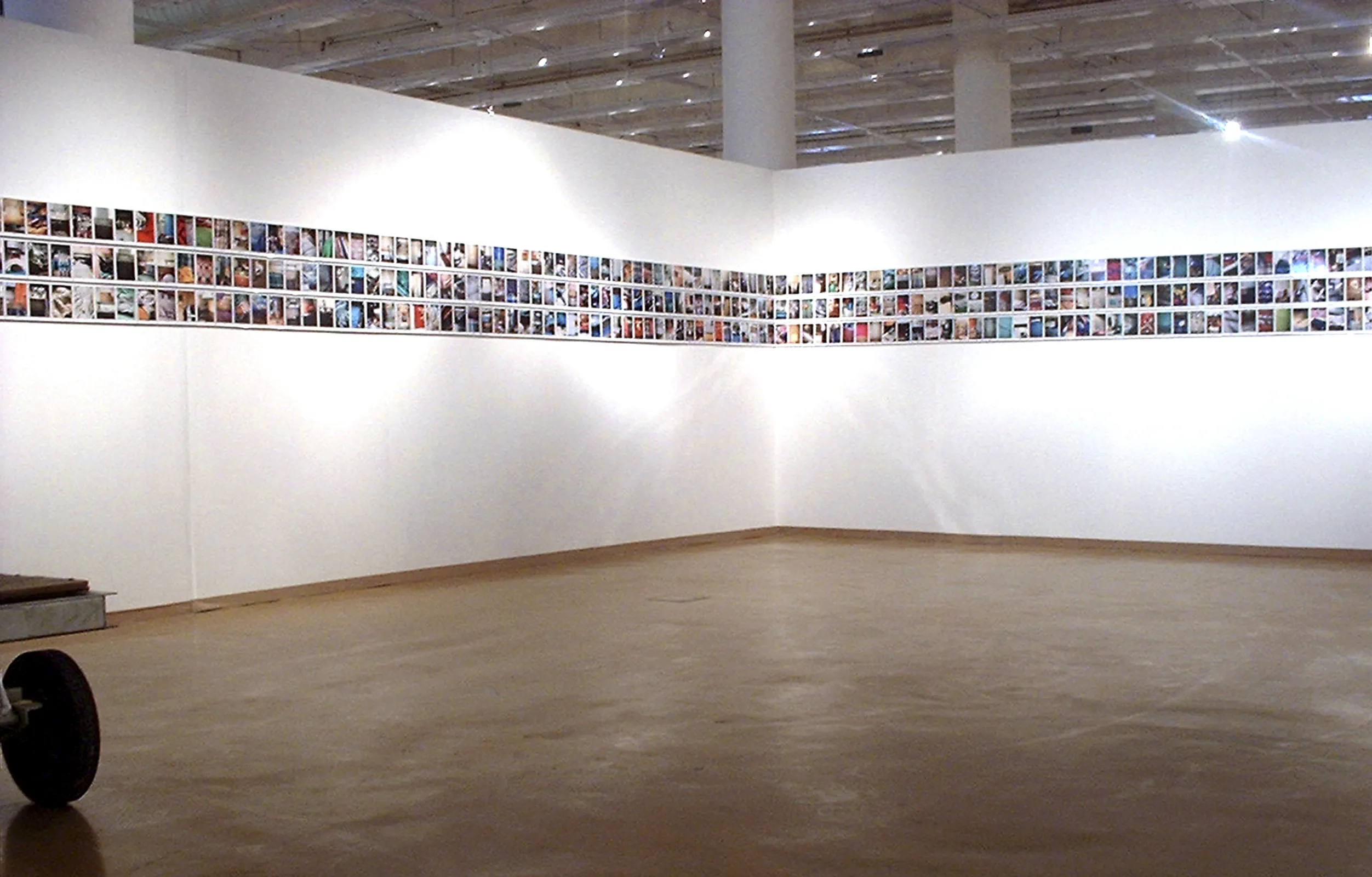
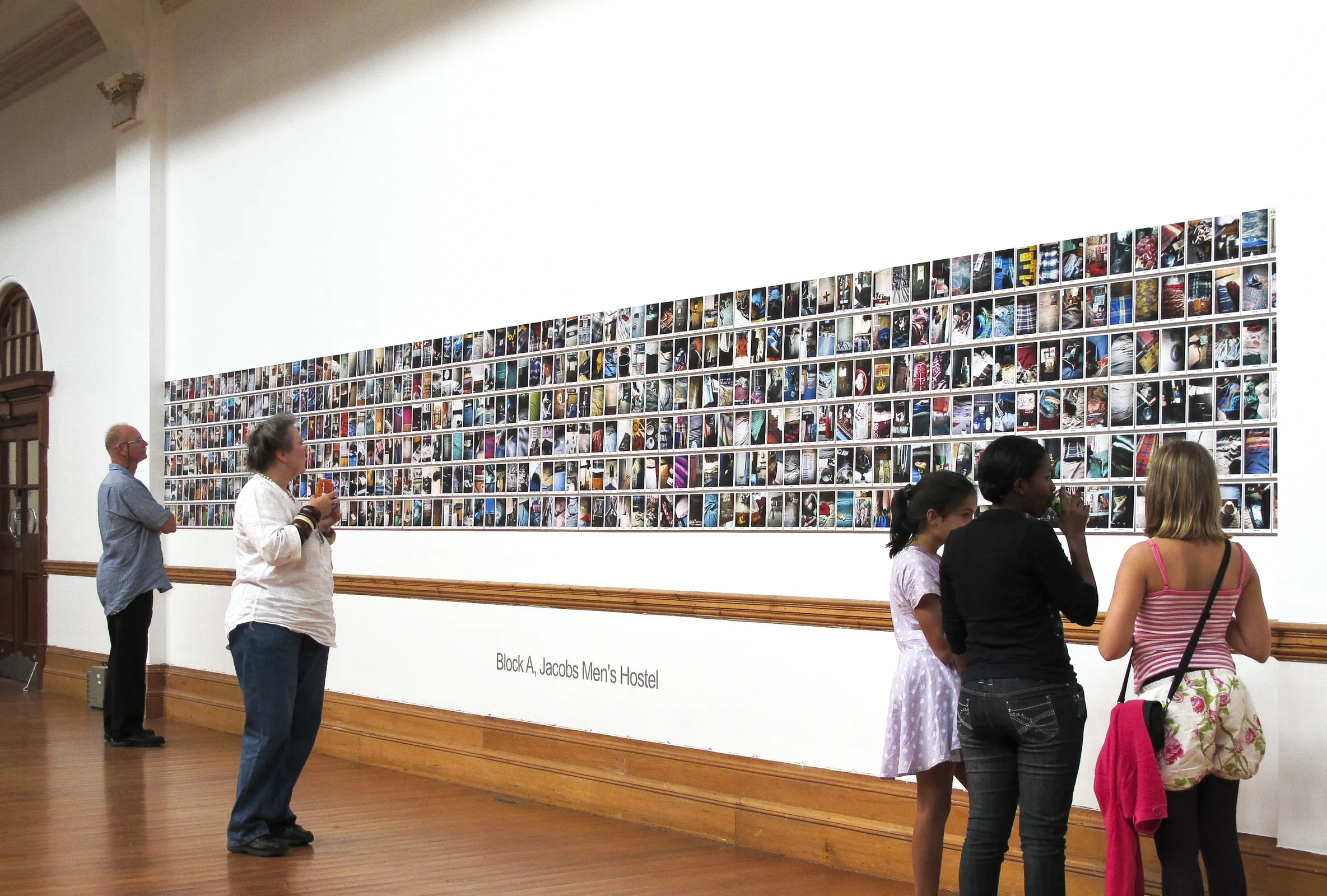
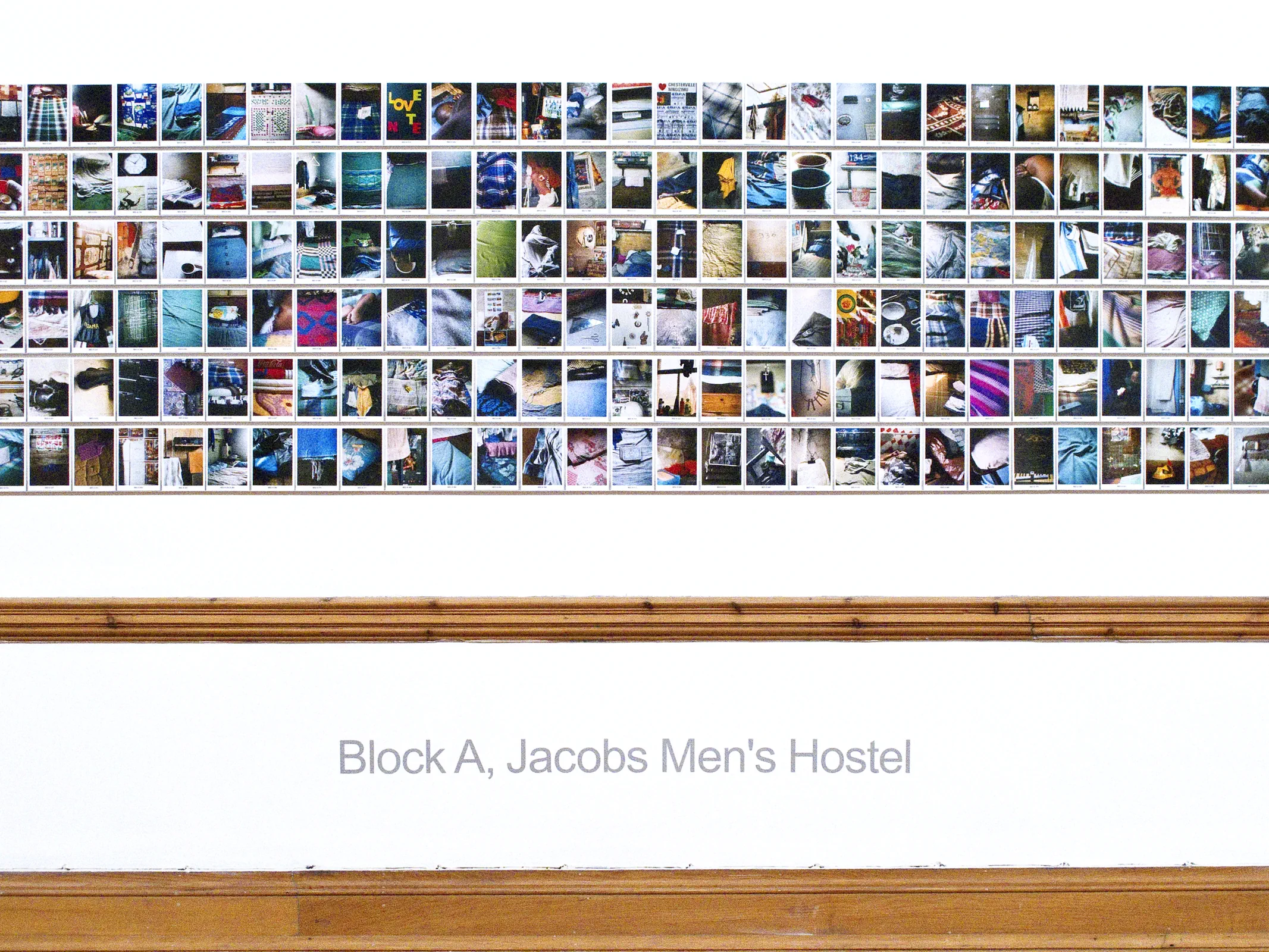
By focusing on the personal details and the artefacts contained within each bed space, the installation explores not so much the actual beds, in terms of providing a document, as it does the human need to personalise one’s living space, and to make from whatever is available, something of ‘home’. Some of the beds spaces contain microcosms of whole lives, most contain some personal fragments, while others are clearly only a place to sleep. Dormitory corners are prized because of the added privacy, and double beds, where they occur are almost always in corners. Buckland was fascinated by the social, spatial and visual complexity, manifest in this place.
The difficult process that Buckland had to undergo to gain access to the hostel, which is usually closely guarded territory, is also emblematic of the complexities of the hostel system. Permission was eventually negotiated on the basis of her intentions for the work.
Her initial attempts were met with discomfort, a reluctance to engage, and even in some instances suspicion. While some of this was related to issues around photography and representation, it was also to do with the fact that she is a white female. Finally, when Buckland met with Councillor Cotoza and presented images from the other bed series, an understanding that the project would not foreground the issue of the hostel as a political space, was established, and the doors were opened.
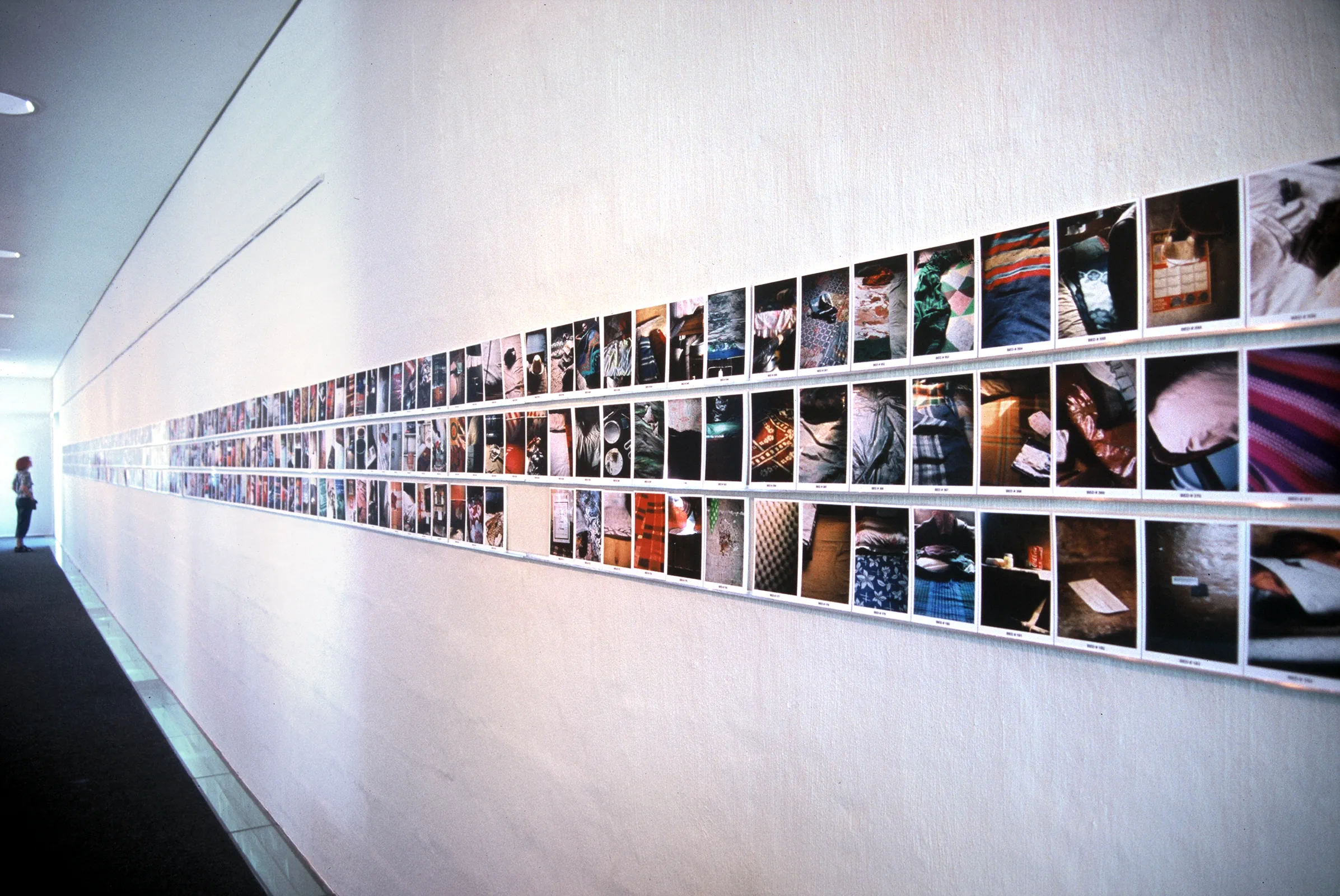
Having gained access – how to image 561 bed spaces? What to include, and what to leave out? What do such images represent?
The other bed project – the Sleep Series – involved careful logistical planning in order to include the whole bed – shot from directly above – in the image, and most of the beds are not photographed in situ. For the hostel work, the focus was not on the bed itself, but the sheer scale of the project, presented its own challenge.
It is the nature of my own involvement in managing hostel upgrading projects, to be focused on what is lacking, and on what needs to be fixed – both physically and institutionally. In the context of very limited resources, the scale, and complexity of the problem, the task often seems impossibly difficult. Although it is undoubtedly true that hostels are far from ideal as living environments, Buckland’s work does challenge many of the negative perceptions surrounding hostel dwelling.
After exploring various photographic approaches, Buckland adopted a fairly radical – and indeed risky – strategy. She allowed herself less than a minute, a single frame of film, to photograph each bed. What makes these photographs particularly extraordinary is that they are photographed ‘as is’; there is no careful styling; no attempt to organise or re-arrange the material, no subtle manipulation of light source, or use of filters. What is at work is a highly refined visual sensibility and sensitivity to the material. Although most of the hostel residents were not there at the time, their presence is almost tangible in the images. Buckland’s work presents an image of the hostel that reveals human richness, and a complex social order, even in an impoverished place.
Joanne Lees
28 October 2002
Joanne Lees is an architect, and housing and urban development specialist, practicing in Durban. She was the KZN researcher for the exhibition ‘blank ____ Architecture, Apartheid and After’, and one of the winners of the international ‘Housing Generator’ competition. Among other things, she is currently involved in the upgrading of the SJ Smith and Umlazi Glebelands hostels.
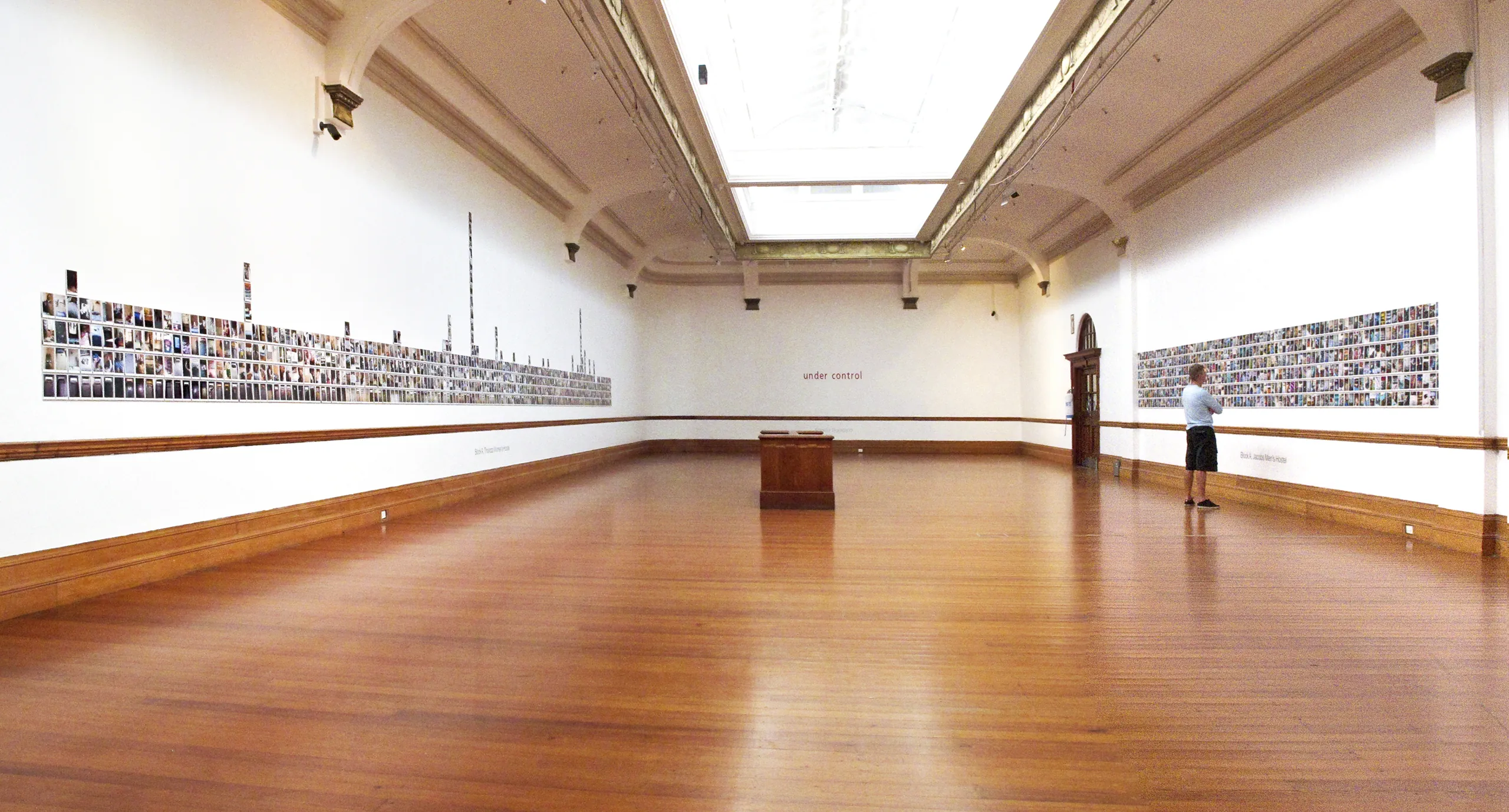
Installation of 561 C-type prints, each 10 x 15 cm. Complete installation measures 48 cm x 19 metres. Exhibited at the KZNSA Gallery, Durban (2002); Museum Africa, DaimlerChrysler Award (2003); and Durban Art Gallery, ‘Under Control’ (2011). Durban Art Gallery Collection.
No prints from this series are currently available for sale. Please use the enquiry form for more information.