Where’s Nikki?
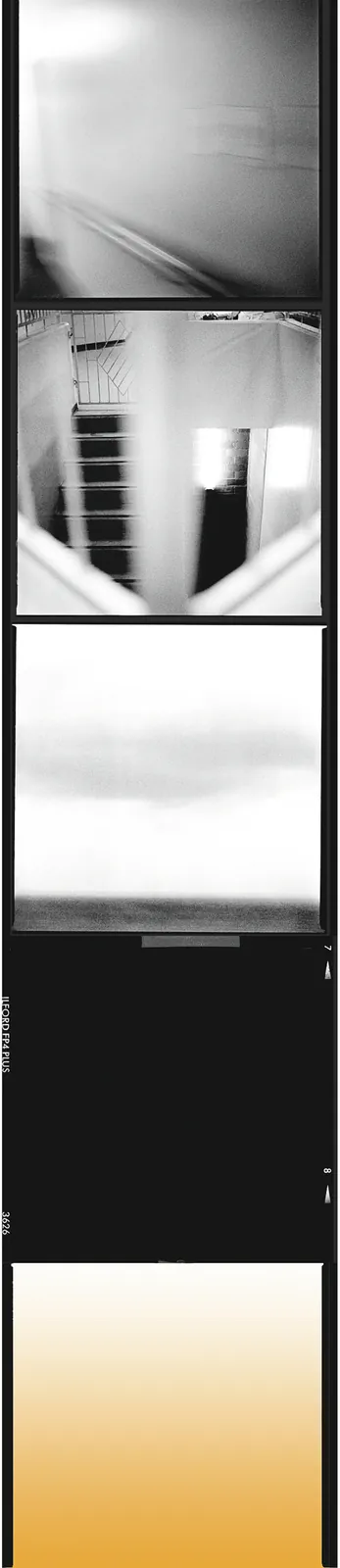
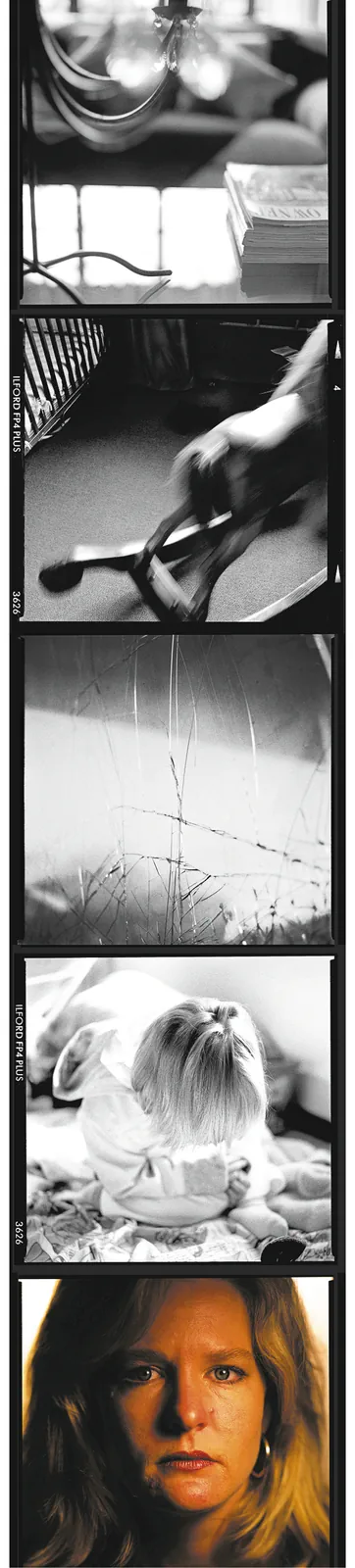
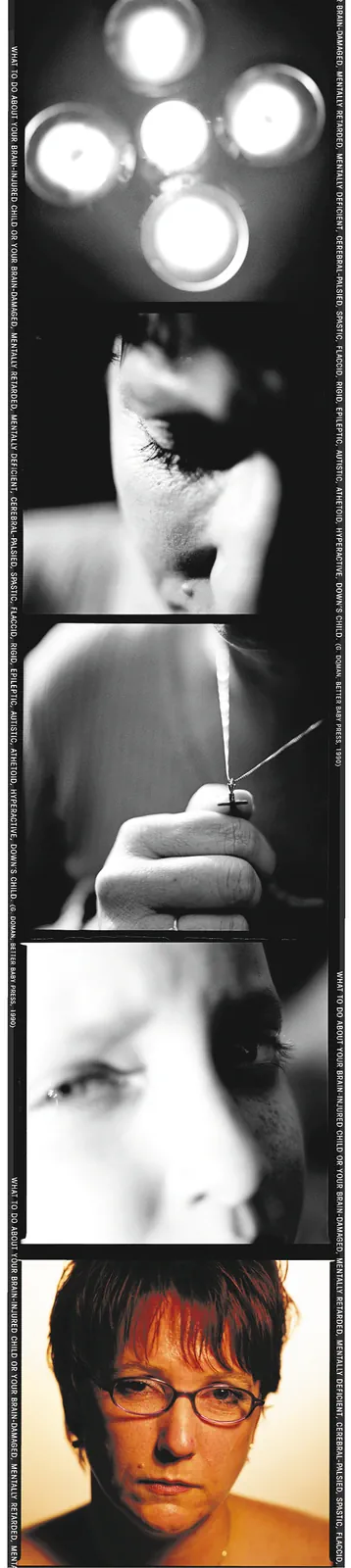
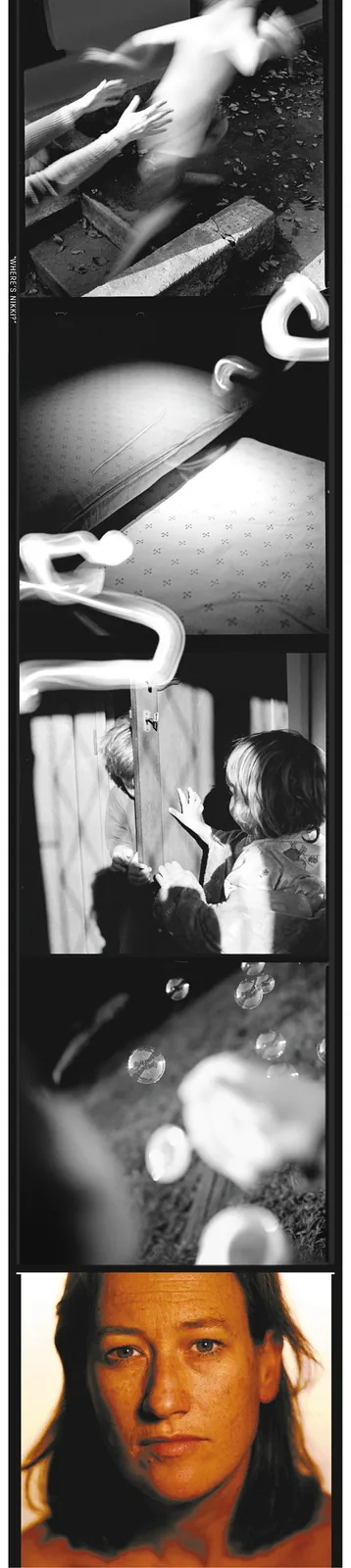
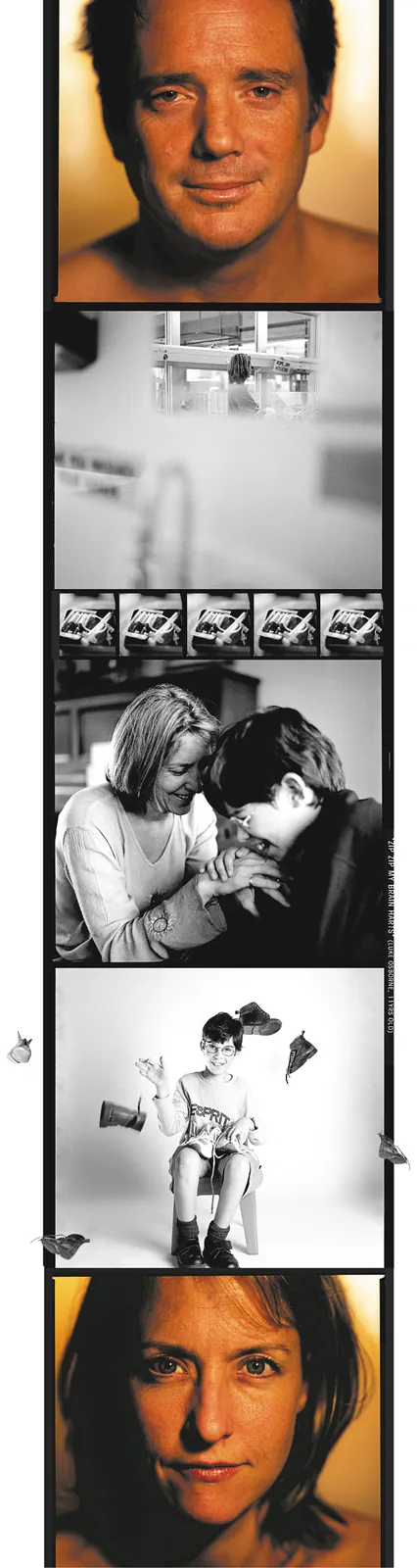
Where’s Nikki was a difficult work to visualise and articulate, it tackles the gamut of fragile human experience around disability. I saw the value of such a process in my different encounters with other parents of special needs children – in their lives, behind the silence. I sourced families willing to disclose their journeys with their children. I was surprised by their readiness to do so and fuelled by their courage in revealing their personal realities; to recount and even re-enact their worst memories.
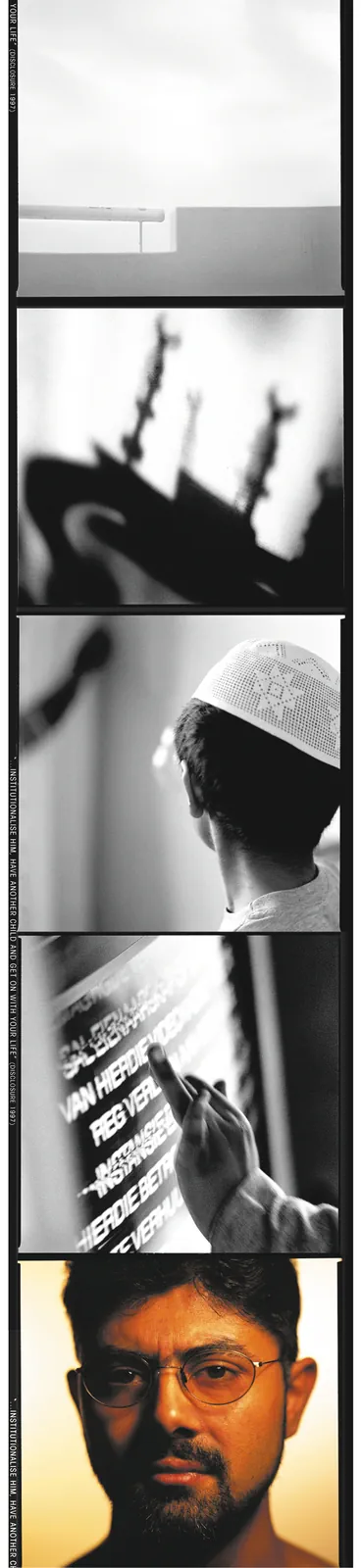
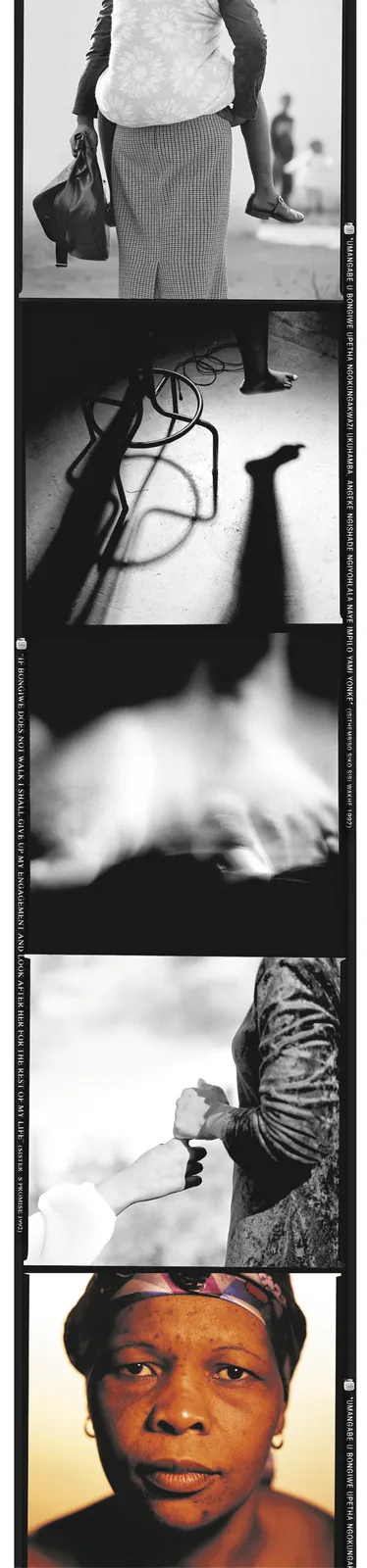
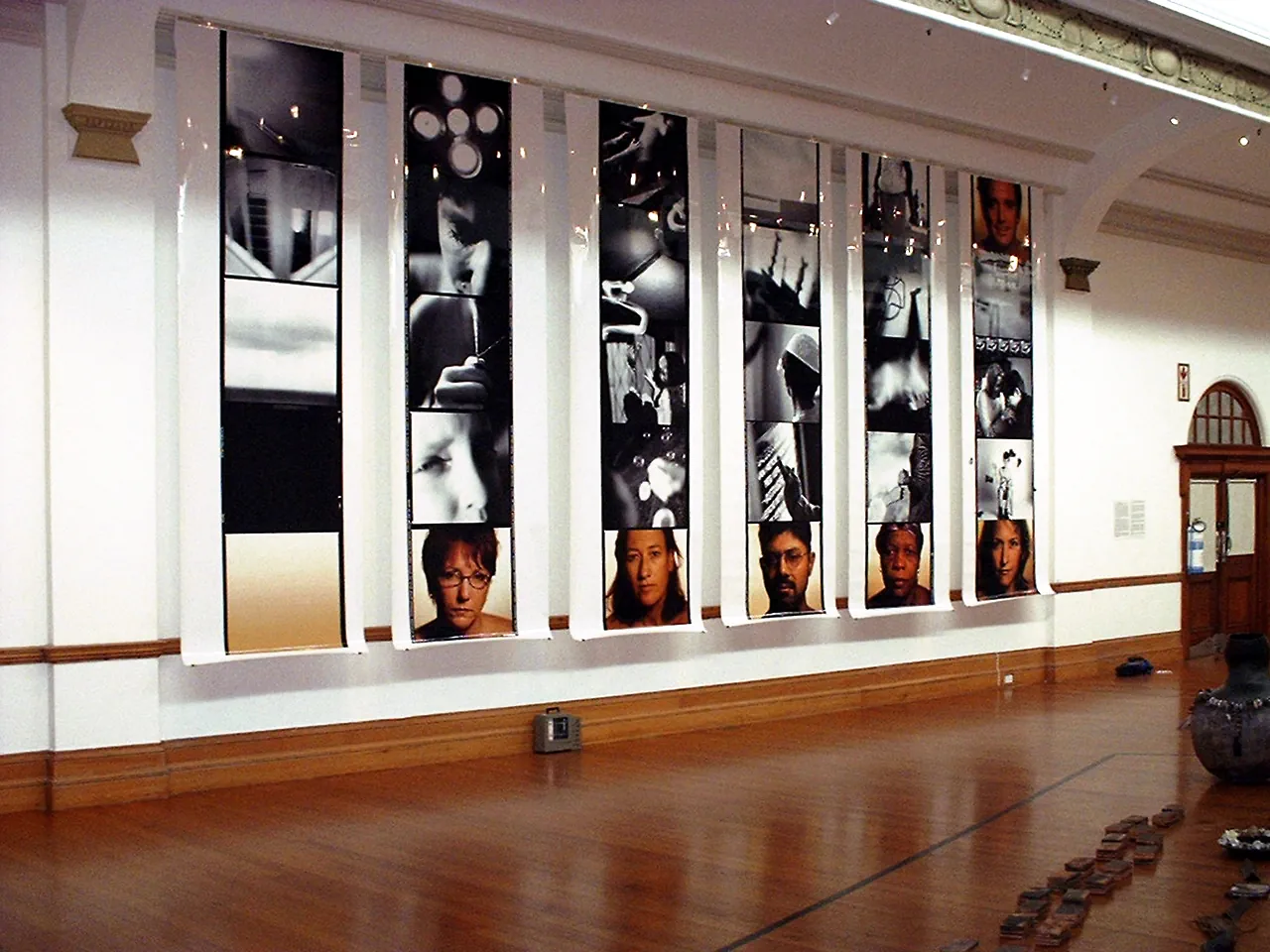
I was also inspired to interrupt the traditional norms of documentary photography and attempt to tell a story in another way. The images are not didactic, nor bound to any documentary “truths”. In the prints, I have inserted images from one family’s experience into those about another’s story, attempting to articulate the common experiences that we share with our ‘different’ children. I used psychoanalysis as a basic structure to construct each family’s narrative. Each story is unique and unveils the extraordinary processes of human experience – a promise made by a sister to surrender her engagement to look after a child that could not walk. The broken hearted fiancé who realises he could lose his bride who then seeks to resolve the situation and finds the miracle cure, “Vaseline” blessed by a Shembe high priest. The daughter walks, the marriage commences. The diversity of ‘spiritual soul searching’ around a collective problem was fascinating, all part of our South Africaness, from the teachings of Islam, Christianity, Shembe to fringe religions. Comments such as “…all sickness is from the devil…”, (teachings of City of Life 1989 – 1992) evoke curious responses, these reflect judgments and projections made by others, often unkind.
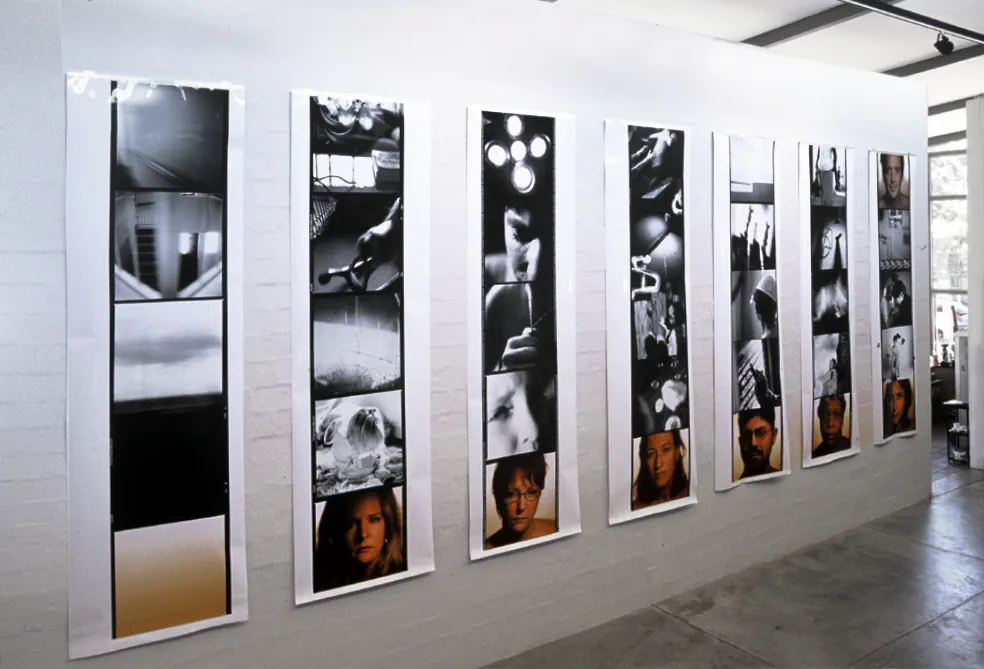
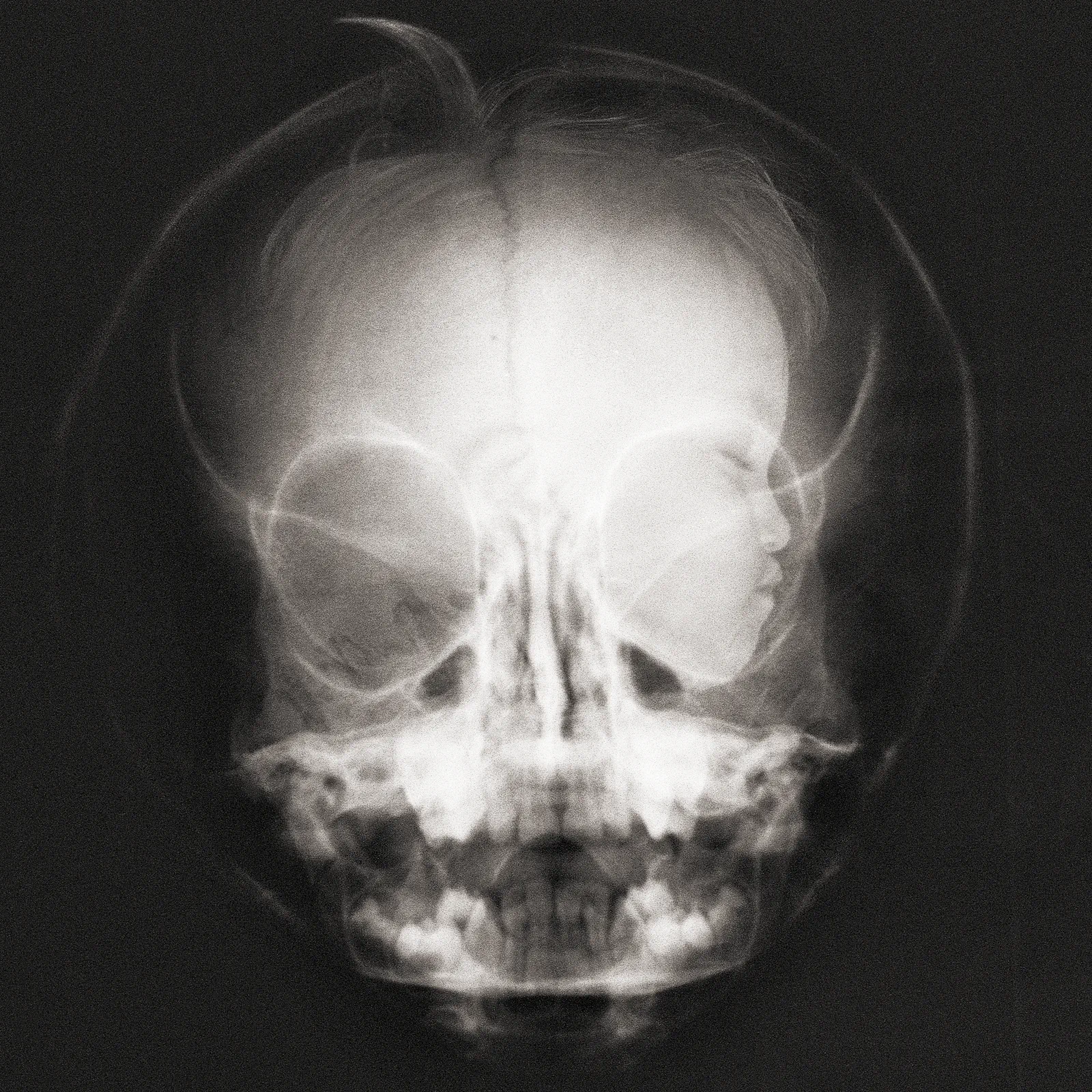
Each vertical print images my response to a family’s particular emotional stage – shock, grief and loss, rage, confusion, relief, acceptance and hope. The verticality of the prints, reading the images from top to bottom (or visa versa) is intended to stimulate the narrative potential in the images, and also refers to time and memory. The large scale – unlike the preciousness and fragility of the ‘Dysmorphic Series’ – is about asserting this material and ‘making it spoken’.
In this work there are feelings of guilt, anger and despair. There is the frenetic race from one doctor to another in a desperate search for a cure, the build-up of tensions within the family, the often energy-sapping everyday management of the child and the worry about the child’s future. But there is also the joy and hope that even the slightest evidence of progress brings, and with it, a greater appreciation of, and for, life itself. Every spectrum of human emotion is played out on many levels. Each situation is different and varies according to the severity of diagnosis. There is only one certainty: uncertainty. Every parent’s secret dread is a ‘dodgy’ child.
Lambda C-Type prints, 400 x 127 cm, edition 1/1 (Durban Art Gallery Collection). Second edition of 3 at 200 x 63 cm. Durban, 2002.